


Why go electric?
Electric vehicles (EVs) offer numerous advantages over traditional internal combustion engine vehicles, making them an increasingly popular choice among consumers. Here are a few benefits we’ve put together:
1. Lower Operating and Maintenance Costs
2. Environmental Benefits
3. Energy Efficiency and Independence
4. Enhanced Driving Experience
5. Incentives and Support
Balanced PROS and CONS snapshot
View Table
What’s the difference between an EV, PHEV or Hybrid?
Comparison Table: BEV vs. PHEV vs. HEV
| Feature | BEV (Battery Electric Vehicle) | PHEV (Plug-in Hybrid Electric Vehicle) | HEV (Hybrid Electric Vehicle) |
|---|---|---|---|
| Power Source | Fully electric, powered only by a battery | Electric motor + internal combustion engine (ICE) | Electric motor + ICE (self-charging, no plug-in) |
| Fuel Usage | No petrol or diesel, runs only on electricity | Uses electricity first, then petrol/diesel as backup | Runs on petrol/diesel, with electric assist for efficiency |
| Charging Requirement | Requires external charging (home charger or public station) | Requires external charging for electric mode but can run on petrol | No external charging needed, recharges via regenerative braking |
| Electric-Only Range | Typically 300–600 km (varies by model) | Typically 30–100 km before switching to petrol | Minimal (a few km at low speeds) |
| Total Driving Range | Limited to battery capacity; range depends on access to charging stations | Unlimited (combines electric and petrol) | Unlimited (similar to a traditional petrol vehicle) |
| Running Costs | Lower (electricity is cheaper than fuel, especially with home solar) | Moderate (electricity is cheaper, but petrol may still be needed) | Higher than BEVs/PHEVs (relies mainly on petrol) |
| Maintenance Costs | Lowest (fewer moving parts, no oil changes) | Moderate (ICE components still require servicing) | Higher than BEVs (ICE requires maintenance) |
| Environmental Impact | Lowest (zero emissions, ideal for reducing Australia’s carbon footprint) | Moderate (low emissions in electric mode but still uses fuel) | Higher than BEVs/PHEVs (uses petrol most of the time) |
| Performance | Instant torque, smooth & quiet ride | Strong acceleration, but heavier than BEVs | Better fuel efficiency than petrol cars, but lower performance |
| Charging Infrastructure Dependence | High – requires access to home/public charging | Moderate – benefits from charging but can run on petrol | None – behaves like a petrol car with better efficiency |
| Availability of Models in Australia | Growing, but still fewer options than petrol/diesel cars | Limited selection, fewer models available in Australia | Wide variety available from multiple manufacturers |
| Purchase Price | Highest upfront cost (but offset by lower running costs) | Mid-range cost (often more expensive than HEVs but cheaper than BEVs) | Generally the most affordable option |
| Best For | Drivers who can charge at home/work and want zero emissions | Those who want electric benefits but need petrol backup for longer trips | Drivers who want better fuel efficiency without charging concerns |
Pros & Cons of BEVs, PHEVs, and HEVs
View Table
Charging an Electric Vehicle (EV):
Here is some information that might help
Types of EV Chargers
EV chargers come in different types and speeds, affecting how quickly you can recharge your vehicle:
View Table
Fast Charging vs. Slow Charging
View Table
Charge Times vs. Range
The time it takes to charge your EV depends on the charger type and battery size.
View Table
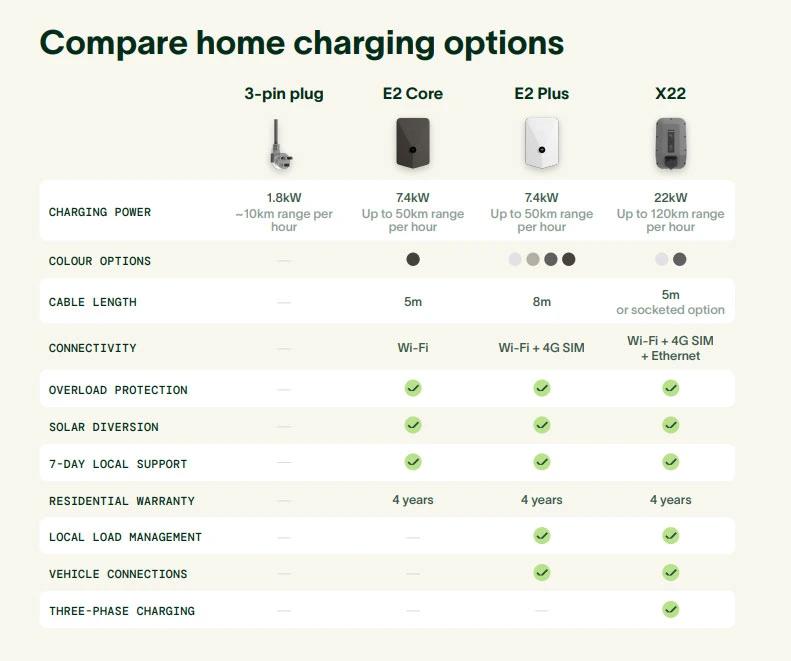
What we offer
EVNEX
Here at Autopact we’ve done the research to find the best most affordable home charging option, so you don’t have to.
Click here EVNEX if you would like to receive a free quote.